
Allen County Court Records After Arrest
The local court path starts with an arrest and booking at the Allen County Detention Center. The custody side belongs to the sheriff and jail. The court side begins when the Allen County Attorney reviews reports and files charges for county-level prosecutions. Allen County is in the 31st Judicial District, and the district court address is 1 North Washington Ave, Room B, Iola, KS 66749. Court hours listed in the research are Monday-Friday, 8:00 AM-12:00 PM and 1:00 PM-4:30 PM. The District Court phone is (620) 365-1425.
Booking allegations are not the same as filed court charges. A jail entry may reflect the arresting officer's initial allegation or a warrant hold. Court records after a jail arrest reflect the complaint, information, indictment, docket events, bond orders, hearings, and dispositions that the court accepts for the case. For custody and booking status, use Allen County jail inmate records. For booking photos, use the Allen County jail mugshots page.
Find Allen County Court Records After Arrest
Kansas CaseSearch is the statewide public case information site. Direct inspection was blocked by browser/cookie controls during research, but official Kansas court material identifies CaseSearch as the replacement for the former public access portal. The 31st Judicial District Allen County page links court access resources and says hearing questions should be verified with the court because calendars may update weekly.
- Search CaseSearch by defendant name or case number when public case data is available.
- Use the Allen County District Court clerk when online court records are not enough or a hearing must be verified.
- Read the charge list against the case docket, not just the jail booking allegation.
- Check bond orders, warrants, amended counts, dismissals, pleas, and sentencing entries as separate events.
| Field Label | Type | Required | Notes |
|---|---|---|---|
| CaseSearch fields | Web search | Unspecified | Direct inspection was blocked; official metadata says public case information is searchable online. |
Charges Filed After Arrest
After an Allen County jail arrest, the County Attorney may file a charging document if prosecution is approved. County Attorney Brandon Cameron's office is listed at 1 N Washington, Iola, KS 66749, with phone (620) 365-1420 and fax (620) 365-1421. The prosecutor's filing is the key point where the case becomes a court record rather than only a booking record.
| Document | Who Files It | What It Does |
|---|---|---|
| Complaint | Prosecutor or officer-supported filing | Starts many criminal cases by stating the alleged offense. |
| Information | Prosecutor | Lists formal charges in many Kansas prosecutions after review. |
| Indictment | Grand jury | Charges an offense through grand-jury action, less common in routine local cases. |
The jail may still show the person in custody while the court case develops. A defendant can be held because bond is not posted, a no-bond order applies, another agency has a hold, or a warrant from another court remains active.
Allen County Charge Status
Charges can change after arrest. A count listed at booking may be amended after prosecutor review, reduced through negotiation, dismissed for lack of proof, or resolved by plea, trial, diversion, or sentencing. A conviction means a court outcome has been entered. A charge is only an accusation until resolved.
| Status | What It Means |
|---|---|
| Pending | The case or charge is still open and has not reached final disposition. |
| Amended | The original charge text, level, or count has been changed by court filing. |
| Reduced | The charge has been lowered to a lesser offense or level. |
| Dismissed | The charge is no longer being prosecuted in that case. |
| Disposed | The court has entered an outcome such as plea, verdict, dismissal, diversion, or sentence. |
Allen County Court Access
The 31st Judicial District Allen County page is the local court source for clerk contact, judges, hours, court calendar links, and public access routing.
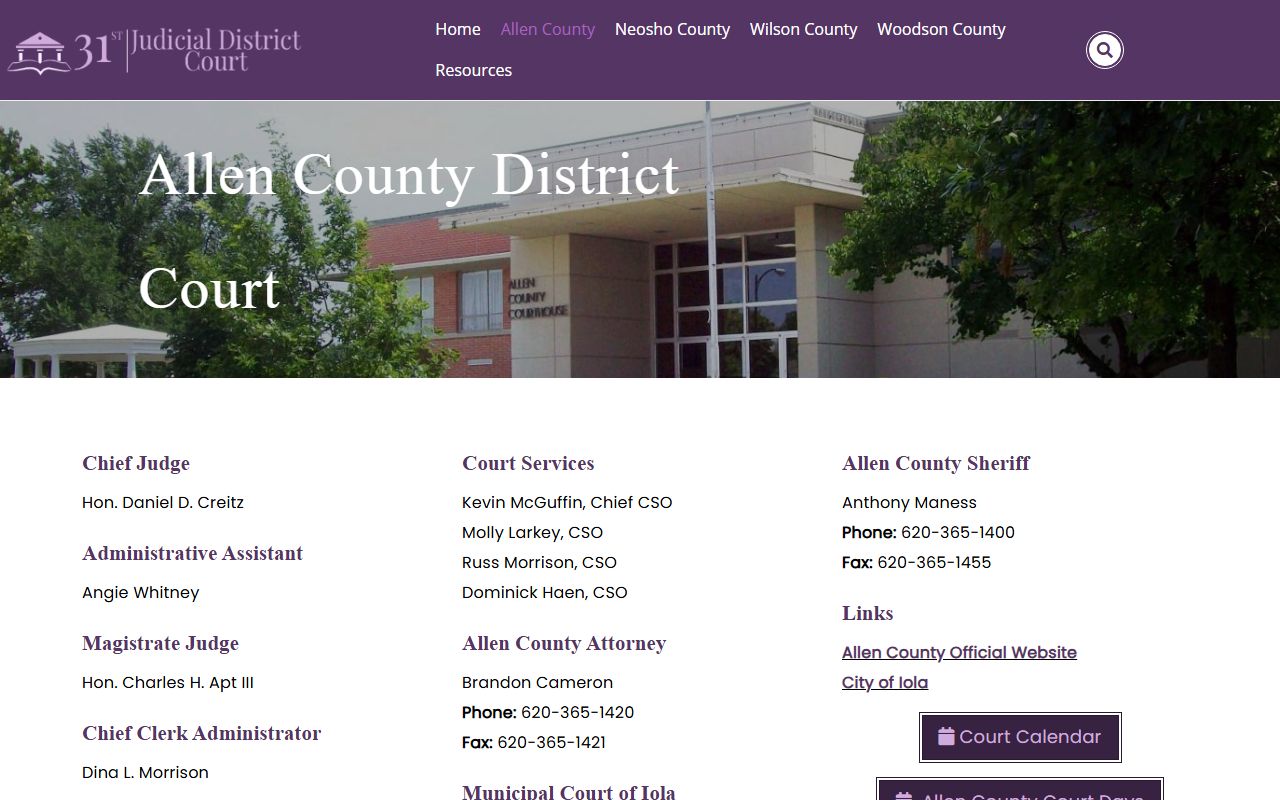
Use the district court contact when an Allen County court record after arrest is not available online or a hearing needs direct confirmation.
The Allen County Attorney page identifies the local prosecutor for county criminal filings.
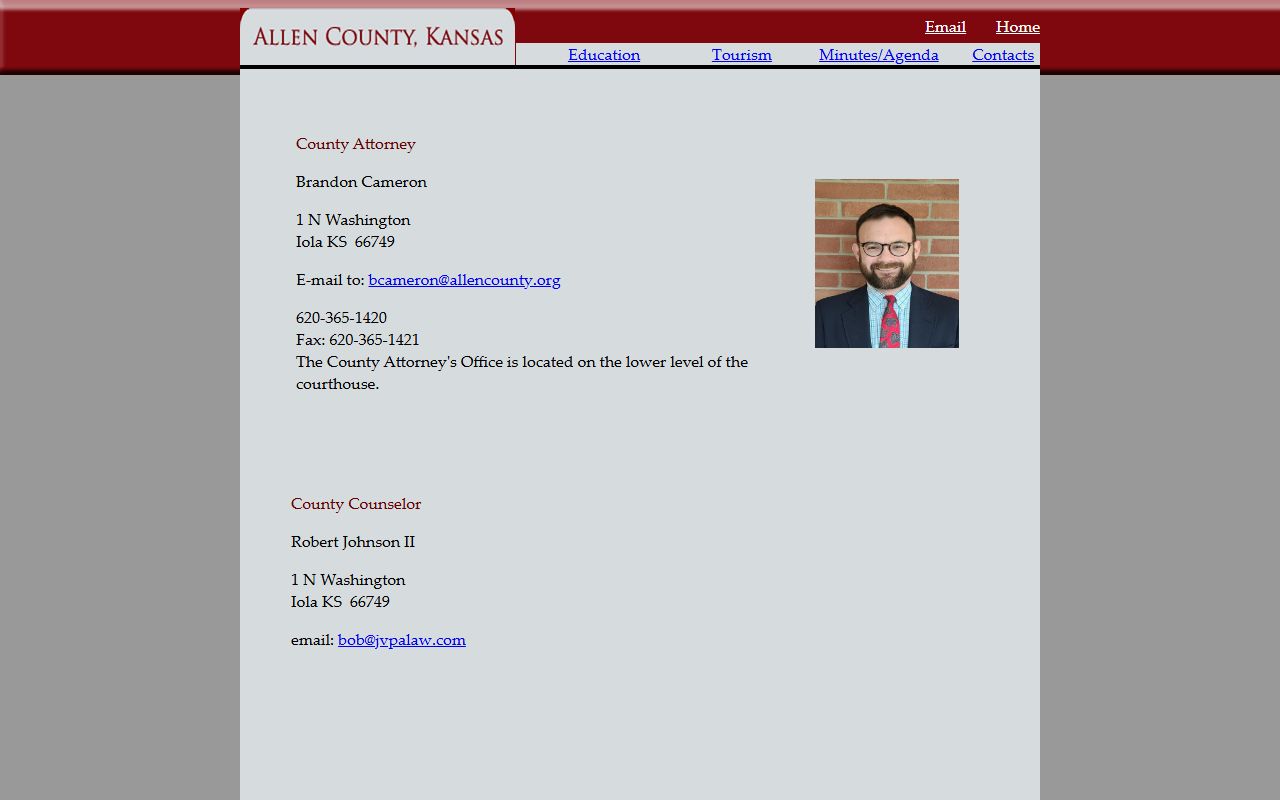
The County Attorney does not replace the clerk as the court records source, but the office explains who reviews and files county-level charges after arrest.
Bond After Allen County Arrest
Allen County's official bond guidance is practical and brief: contact an approved bail bondsman for the area and make arrangements for that bondsman to come to the Allen County Detention Center to complete paperwork before release. Call the jail at (620) 365-1402 before attempting a bond transaction to confirm custody, bond status, holds, and whether the bondsman is approved locally.
| Bond Type | How It Works |
|---|---|
| Cash bond | Full cash security may be required when ordered by the court or warrant. |
| Surety bond | A commercial bail bondsman posts the bond after making arrangements with the defendant or family. |
| PR bond | Personal recognizance release rests on a promise to appear, when allowed by the court. |
| No-bond hold | Release is blocked until a judge changes the order or another hold clears. |
| Detainer | Another agency asks the jail to hold the person, often after local bond is addressed. |
Warrants and Court Records
No official online Allen County active-warrant search was located. The sheriff FAQ says a person who suspects an active warrant may visit the Sheriff's Office with valid identification for a warrant check. The office is open Monday-Friday, 8:00 AM-5:00 PM. Bench warrants may originate from Allen County District Court, Iola Municipal Court, or another court, and a warrant arrest can lead to booking at the Allen County Detention Center.
Municipal Court of Iola is listed with phone (620) 365-4962. Allen County District Court is listed with phone (620) 365-1425. The sheriff phone is (620) 365-1400, and Communications is (620) 365-1437. Kansas AG guidance treats warrant affidavit access as a separate process, so a normal KORA request is not always the correct route for warrant affidavit material.
Charges vs Convictions
Court records after a jail arrest often show both accusations and outcomes. Treat those as separate facts. A person can be arrested and charged without being convicted. A conviction requires a plea, verdict, or other court disposition that establishes guilt for the offense listed in the judgment.
| Charge | Conviction | |
|---|---|---|
| Meaning | An accusation filed in court. | A final finding or plea accepted by the court. |
| Timing | Early or mid-case. | After plea, trial, or other disposition. |
| Can change? | Yes, it may be amended, reduced, or dismissed. | Changes usually require later court action. |
Sealed and Expunged Records
Kansas court access is shaped by public-record rules and court-specific limits. Juvenile matters, sealed records, expunged records, warrant affidavit procedures, and criminal investigation records may not appear like ordinary adult criminal cases. Expungement is the legal process that limits public access after an eligible outcome; sealing hides a record from ordinary public view while retaining controlled access for permitted users.
| Sealed | Expunged | |
|---|---|---|
| Public visibility | Hidden from ordinary public access. | Public access is restricted under the expungement order. |
| Record existence | The record remains but is limited. | The record is treated under the terms of the expungement law and order. |
| How to verify | Ask the court clerk about access rules. | Review the court order and Kansas law that applies to the case. |
Important: Do not use casual court-record searches for FCRA-covered decisions such as employment, housing, credit, or insurance screening.
KORA Limits After Arrest
Kansas Open Records Act rules apply to many government records, but they do not make every arrest-related document public on demand. K.S.A. 45-220 covers request procedures and fees. K.S.A. 45-221 lists records that agencies are not required to disclose, including criminal investigation records. Kansas AG guidance says jail rosters and police blotters are open, while mug shots and standard arrest reports may be withheld under criminal-investigation exceptions.
For ordinary Allen County KORA requests, the sheriff FAQ routes requesters through County Clerk Shannon Patterson at 1 N. Washington, Iola, KS 66749. The listed clerk phone is (620) 365-1407 and the email is coclerk@allencounty.org. Court records that belong to the judicial branch should be handled through Kansas court systems or the district court clerk, not by treating the jail as the case-file custodian.